The Evacuation of Tradition

What is the best way to evacuate something, to purge it, to eliminate it? A scourge of social values and cultural history: Innovation and Modernity. And the only thing that needs to be done for all of this: The Evacuation of Tradition.
Yet, one of the conceptual obscurities that has gripped the world is the concepts of tradition and innovation. For years, we have been trapped in the rigid belief that the traditional worldview is reactionary, while the innovative worldview is revolutionary and modern. The Evacuation of Tradition is a manifestation of the greatest confusion the modern individual cannot escape. It’s time to take a Reverse Look!
The deeply ingrained belief that modernity is a recipe for salvation, and that tradition must be immediately purged, has created certain breaking points and interruptions in the flow of history. And thanks to these interruptions, history has been able to sustain itself. To write history is about the creating a record of these interruptions or ruptures.
But today, humanity suffering from modernity is experiencing immense suffering and fatigue. After the evacuation of tradition, the pendulum of history is now shifting toward the evacuation of the concept of modernity. And at this point, we see a return to the past, a yearning for nostalgia, and the re-questioning of the traditional, blossoming into rituals shaped into “modern” forms. Retrospective marketing strategies that have gripped our minds have enabled us to reconsider the ambiguous place of tradition.
The Evacuation of Tradition: Firefighters of the Revolution
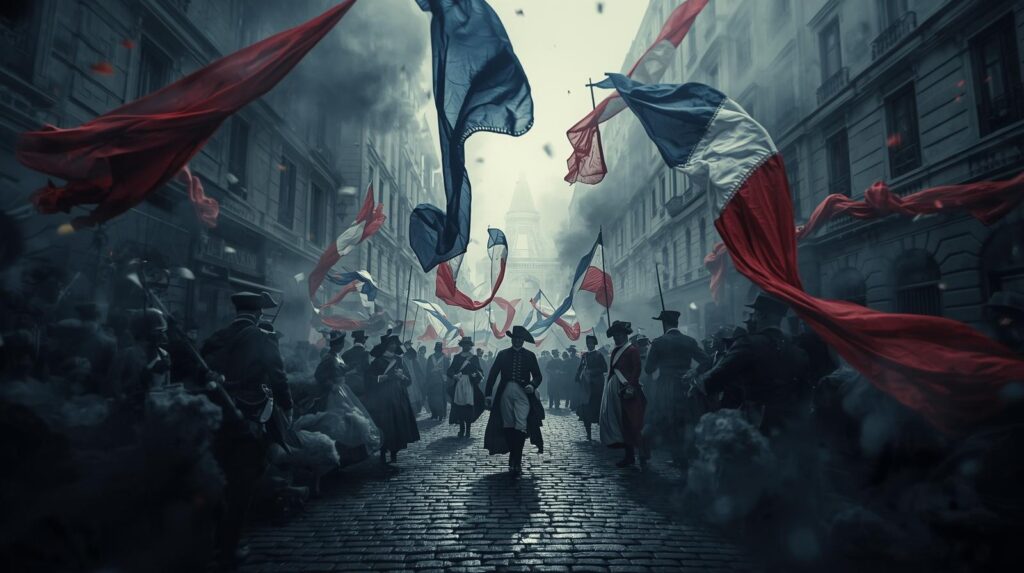
When people and societies are unhappy and the system no longer suffices, souls begin to flare. This mass fervor ignites the atmosphere. From the bourgeoisie seeking to rid themselves of the rotten royal order in the French Revolution to the Jacobins, and from there to the Girondins and Montagnards, everyone set things ablaze and sought to dismantle the gangrenous system.
After Paris became a hotbed of chaos, the firefighters of the revolution, who arrived to extinguish the remnants of the chaos, emerged armed with new concepts derived from modern ideas. They made a tremendous effort to clear away the remnants of the old and unclog the drains. Everything that clung to the traditions of that decaying, corrupt system had to be evacuated immediately.
There were some who opposed this. Their argument was that the revolution was characterized as a violent and sudden leap, contrary to the evolutionary nature of slow progress, and that its implications would not last. Very soon, the rapid evacuation of tradition began to fail. These new concepts, introduced by top-down firefighters, proved too narrow for the social body. The situation turned into a bloodbath. The bloody nature of the revolution created terror and suspicion, eventually leading to the predation of its own children.
The Evacuation of Tradition: The Endless Wound
Another example of the Evacuation of Tradition was 20th-century Germany. Previous evacuation movements shifted form and took on even more drastic forms. We witnessed the gradual tragedy of a nation before the eyes of the entire world. This devastating evacuation bore the marks of the birth of modernity. A new world was being established, and new generations were paying a heavy price for its axial shift. The course of history accelerated in a way befitting these birth pangs. For example, progressive and powerful states advocated for modernity, rewriting international guidelines accordingly. Those who failed to comply would be punished.
When the concept of modernity, a child of the industrial revolution, was transformed into a tool of political interests, the bloodiest events of the 20th century took place. Two world wars, the interwar period, economic depression, and decades of civil war. 1900’s was tantamount to being a victim of an accelerated history. Or rather, a winner…
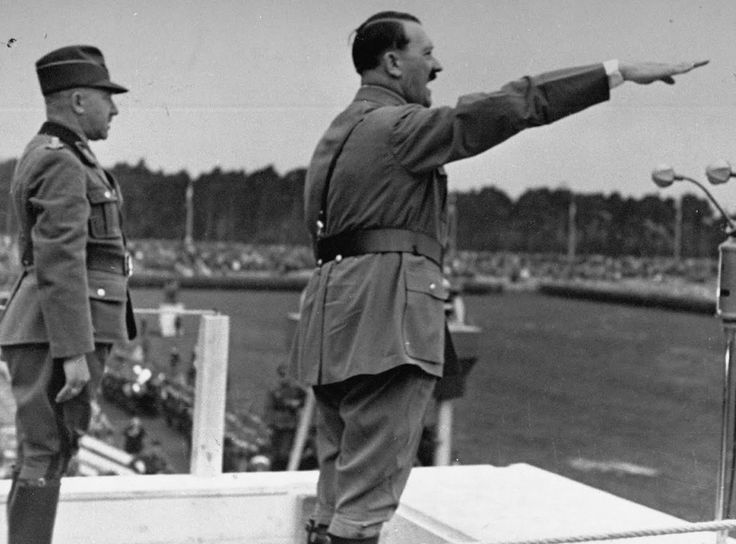
The entire world witnessed the tragic story of Hitler and a nation, etched in the bleeding wounds of German society and the tainted memory of its social consciousness. All of this led to catastrophes that those who sought to maintain and preserve their own resistance to progress and traditions, sometimes relying on lies and the distortion of history for this ideal, could never forget.
After the war, Germans, eager to salvage their nation’s honor, began to reconcile revolutionary and modern progress within their own traditions, repair the stains on their recent past, and revise their nation. Of course, at this point, they attempted to bypass the pages and ignore certain things. An era had to be forgotten and erased from memory. Defeated nations like Germany and Japan were now ready to temporarily put their traditions aside.
The Evacuation of Tradition: A Great Regret
The bleeding wounds of transitional societies, forced to blend the traditions of the past with the modern ideas of the new world, have never healed. These societies, constantly traversing the cultural landscape of history, eventually began to question certain things. The Germans, Koreans, and Japanese are examples of this. Europe’s engineering and Asia’s technological leaps were, at one point, the product of these questionings.
From Yuval Norah Harari to Zygmunt Bauman, from Byung Chul Han to Baudrillard, postmodern critics have now examined modernism and the effects of its rapid change on human nature and social structure.
In the age of speed, the fear of missing out (FOMO) has emerged. Never before has the side effects of a dynamic and highly performative society been more pronounced. A worldview has emerged where intervals, rest, questioning, and revisiting the past are excluded and naturally disregarded. In this postmodern world, where those who fail to keep pace with the flow of information has severe punishment, the individual has gradually begun to evaporate.
The Evacuation of Tradition: For the Sake of a Misunderstanding
The evaluation of conservatism within religious discourses became the greatest driving force in the exclusion and inversion of traditionalism. The modern and the seemingly progressive had to maintain a strict distance from faith and religious discourses. This emptying of meaning and the interweaving of concepts led to confusion. As a result, the modern individual experienced one of its greatest alienations. The friction between existing social identity and faith and the endless search for truth.
In this world, where all that is solid has evaporated and desperate strategies are rampant, there are lives that have been discarded. New layers of reality have necessitated the purging of knowledge and beliefs inherited from past generations. The persistent tension of past beliefs over the new has created violent conflicts in consciousness. Strategies were everywhere, but they were all helpless.
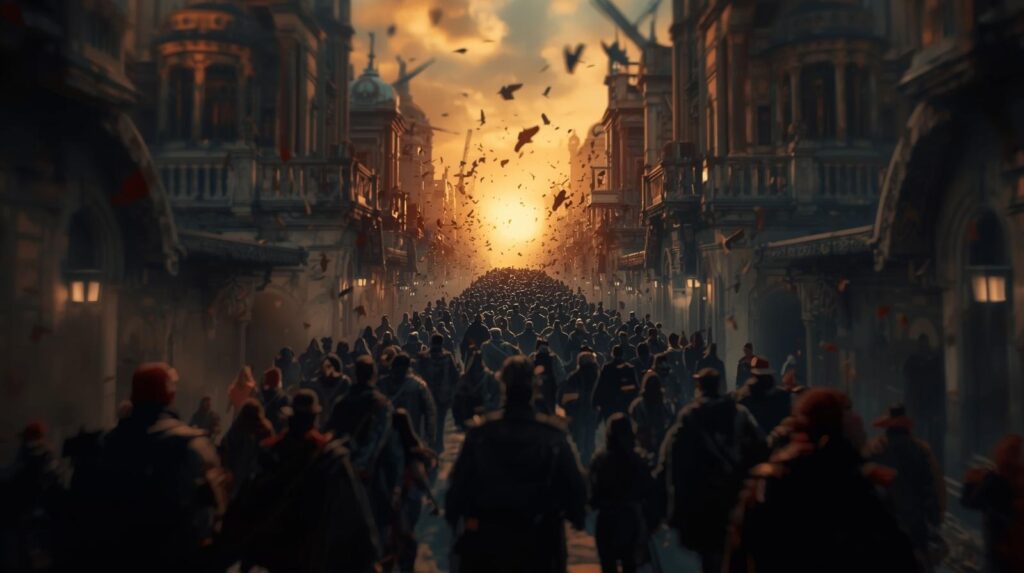
The Evacuation of Tradition: Desperate Strategies and Social Hysteria
When you think more than you desire, your thoughts begin to bleed. The tragic story of societies driven toward unknown destinations in the pursuit of a place in history and a solidification of their place (though sometimes necessary) shows us how newness and concepts that suddenly appear are exploited.https://youtu.be/Wu1mR8mTGkE?list=LL&t=1
The bloody costs of progress and the transition to the new have left unforgettable wounds in the social unconscious. This intergenerational transmission of trauma has fueled the individual’s despair in a society where everything is intertwined and resolution is lost like muddy water.
The historical rift between nature and human civilization is a reminder of the distortions in temporal perception. Nature’s centuries-long evolutionary path also reveals the attempts of humans, a product of nature, to compress time within their own historical consciousness.
Despite our place in nature being relatively new, we, as humanity, attempt to superimpose our own evolutionary progress and destiny upon time. Because we have been led to believe that we will possess divine sovereignty.
All of humanity is paying the price for this temporal shift and widening distance between nature and humanity. While time is relative, all individual and societal steps taken to dominate and cram time have led to the modern individual’s alienation from nature.
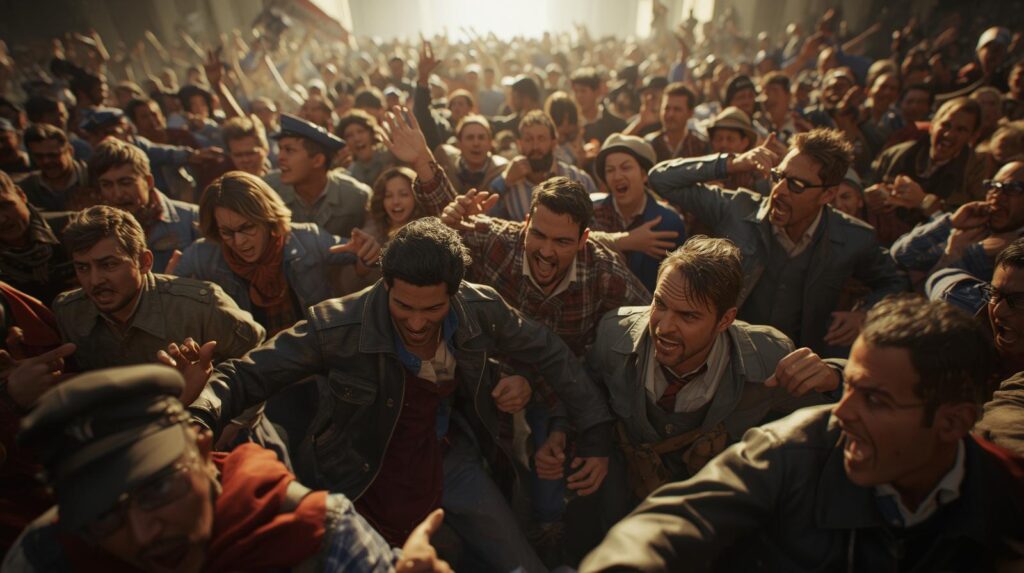
It’s ironic that the individual who attempts to seize and dominate time increasingly assumes the role of god on the stage of history, a Pyrrhic Victory that always fails. (a battle everyone loses, but a so-called victory).
The souring in social memory caused by the new, which is quickly assimilated, and the tradition that is hostile to it, never fades.
The Evacuation of Tradition: The Opening Scissors
The evacuation of tradition has accelerated the modern individual’s identity crisis. In the modern world, the individual has been made responsible for all their actions (with a confinement that doesn’t even concern them). The emphasis on change is considered more normal than the existence of balance. Fluid information, permeating all areas of life, has become an essential nutrient that the modern individual must rapidly pursue.
We search for signals of the future within the present. Advance at full speed, unguided, in a pervasive and decentralized network society.
We can see the ravages of modernism in the explanations in the DSM (Diagnostic Criteria Assessment Manual). A few syndromes that existed before modernity are now filled with hundreds of diagnoses. The biggest reason for this is, of course, the excessive speed of the idea of social progress and the damage it creates. All of this has led to the rapid erosion of the human spirit and the dissolution of identity.
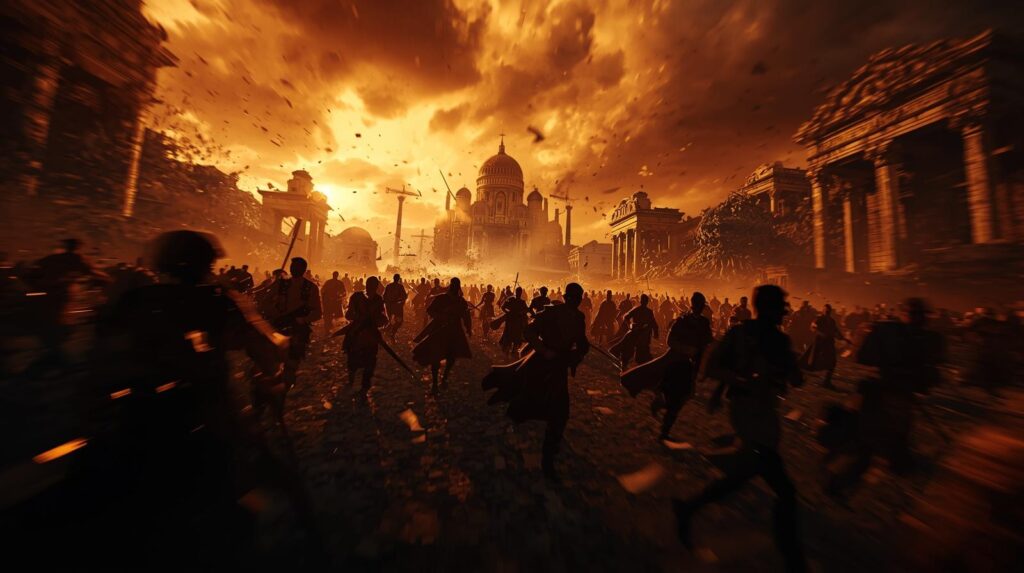
Functionality, the new concept of modernity, has been sanctified. In the pursuit of capturing and clinging to functionality, individuals have become radical victims of endless competition. Dysfunctionality has become the worst nightmare for the systems that drive the new. The individual must be reclaimed and rapidly progress by engaging with the modern, fluid world.
People’s autobiographical search for solutions to the problems inherent in the system of hyper-fluid modernity has become an inextricable quest for a holy grail.

Related Posts

Purpose Crises

Mediocre Loop : Spinning Around In a Circle